
Show summary Hide summary
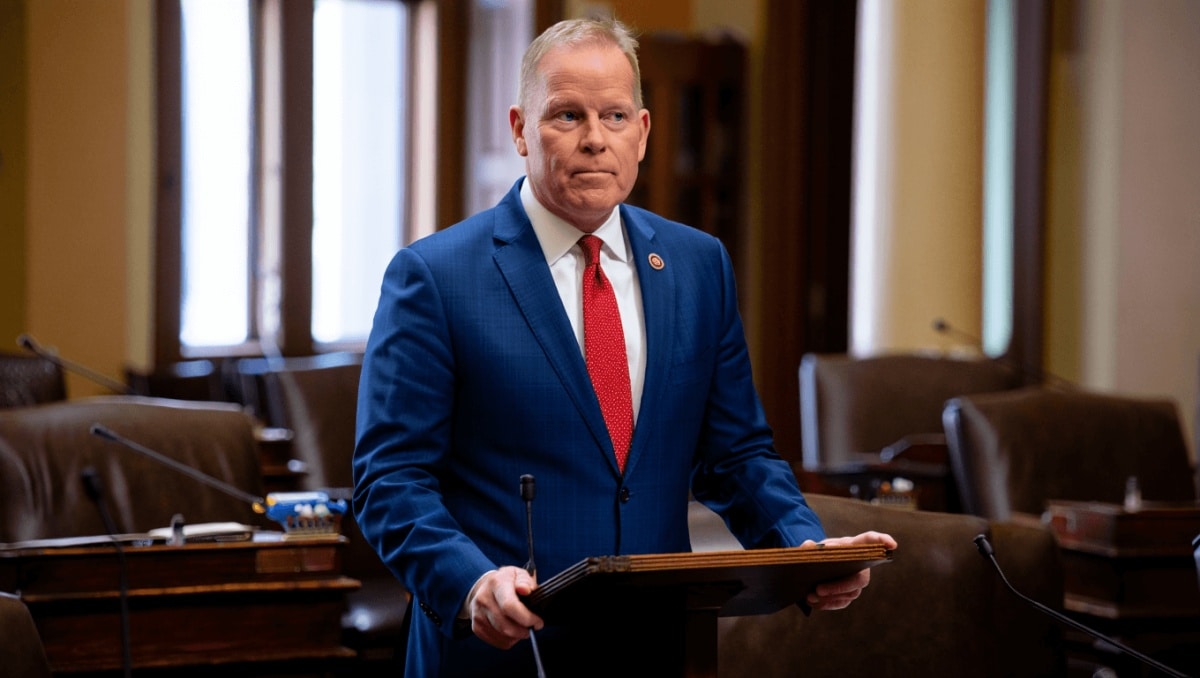
Representative Clay Higgins, known for blunt rhetoric and high-profile stances, again grabbed headlines after casting the sole vote against a House measure to force public release of investigative records tied to Jeffrey Epstein. His dissent and the explanations he offered reignited debate over transparency, privacy and how campaign money flows in Louisiana politics.
Why Higgins voted no on the Epstein records release
Higgins argued the measure would break with long-standing criminal procedure and risk harming private citizens. On social media he framed his opposition as a matter of principle, saying the bill exposed witnesses and could injure innocent people.
Bitcoin crash imminent: U.S. economist warns last chance to sell
Catastrophic liquidation event incoming: senior strategist issues urgent warning
His position drew immediate criticism and praise from across the aisle, underscoring how a single vote can shift national attention to a congressman from Louisiana’s 3rd District.
Where Higgins’ campaign funding comes from
Campaign finance disclosures and watchdog data show Higgins received support from a mix of conservative PACs, regional businesses and individual donors. The numbers reflect both ideological and local economic ties.
Top sector contributions
- Conservative and Republican PACs: about $76,000
- Crop production and agribusiness: roughly $62,000
- Contributions from retirees: about $47,000
Notable organizational donors
- House Freedom Fund: $18,200
- LHC Group (Lafayette-based health firm): $18,200
- B&G Food Enterprises (regional food operator): $16,500
These figures come from FEC filings and compilations by OpenSecrets, which track federal campaign receipts and donor categories.
Individual supporters and local backing
On the individual side, Higgins raised nearly $300,000 during the 2023–2024 cycle. That money predominantly originated from Louisiana residents.
- Local farmers and agribusiness employees
- Workers in energy and related fields
- Small business owners and retirees
Public summaries usually highlight PAC giving more than personal donations, but aggregated FEC data show a broad base of individual supporters without unusual concentration.
Salary, disclosure limits and the challenge of estimating Higgins’ net worth
Members of Congress earn an annual salary of $174,000. Financial disclosures filed by Higgins suggested a mid-six-figure profile, with one prior estimate placing his net worth near $500,000.
However, the most recent disclosure offers limited detail. It lists no specific assets and records a single liability: a mortgage serviced by PennyMac Loan Services.
Congressional reports provide value ranges and omit some categories, such as certain retirement accounts and personal property. That makes precise valuations difficult and often understates total wealth.
Why disclosures can be incomplete
- Assets often reported in broad ranges rather than exact amounts.
- Certain holdings, like primary residences or federal pensions, may be excluded.
- Small businesses and privately held interests can be hard to quantify publicly.
Image credit via Shutterstock










