
Show summary Hide summary
- What changes on December 31, 2025: CEO role hands off
- From a failing textile mill to a global conglomerate: Berkshire’s evolution
- Numbers that tell the story: stock surge and market value
- Performance vs. the market: how Berkshire compares to the S&P 500
- Balance-sheet strength: cash reserves and liquidity
- Greg Abel’s task: steering Berkshire after Buffett
- What shareholders and markets will watch next
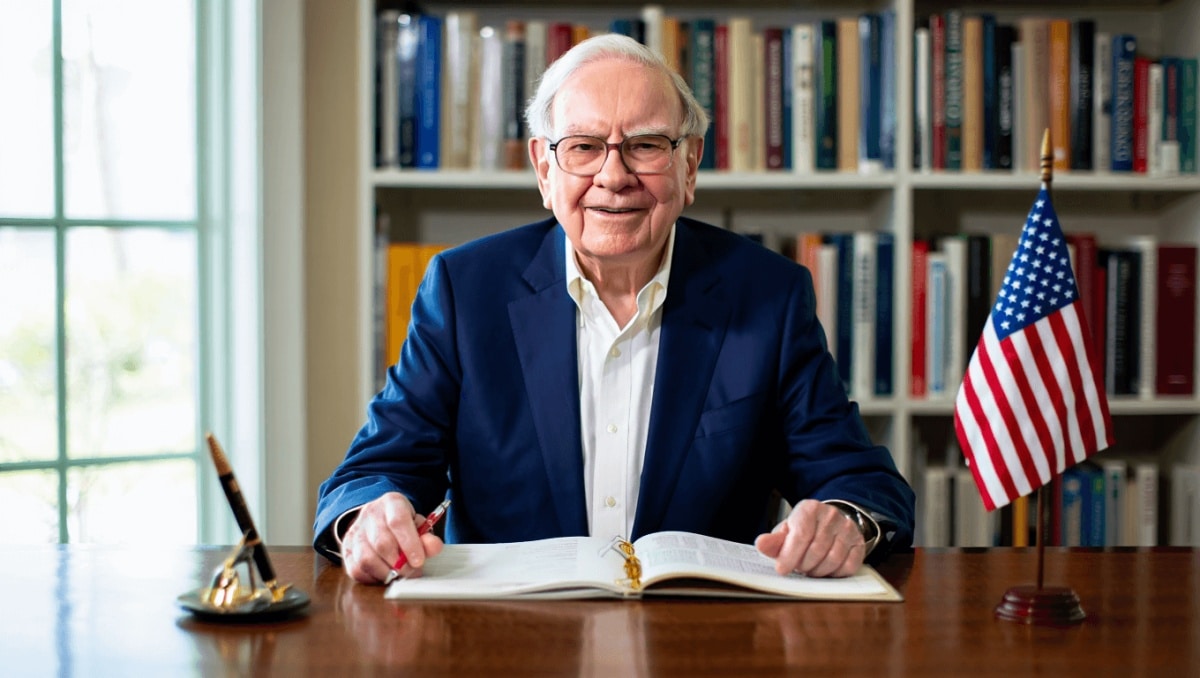
Warren Buffett announced he will step down as CEO of Berkshire Hathaway on December 31, 2025, bringing a pivotal leadership chapter to a close while keeping a significant role in the company’s future. The move marks a shift for one of the most storied names in investing and raises fresh questions about succession, strategy, and Berkshire’s path forward.
What changes on December 31, 2025: CEO role hands off
Buffett will leave the CEO office at year-end but will remain the company’s chairman and controlling shareholder. That separation of duties keeps him central to policy while making operational leadership someone else’s responsibility.
Bitcoin crash imminent: U.S. economist warns last chance to sell
Catastrophic liquidation event incoming: senior strategist issues urgent warning
- CEO stepping down: Effective December 31, 2025.
- Ongoing influence: Buffett stays as chairman and largest shareholder.
- Investor focus: Markets will watch how governance and decision-making evolve.
From a failing textile mill to a global conglomerate: Berkshire’s evolution
When Buffett assumed control in 1965, Berkshire Hathaway was known for textiles. Over decades it transformed into a diversified holding company. Today it spans insurance, energy, manufacturing, and major equity investments.
- Core businesses now include insurance operations and utility companies.
- Large equity stakes in public companies anchor the portfolio.
- Diverse revenue streams reduce reliance on any single industry.
Numbers that tell the story: stock surge and market value
Buffett’s tenure produced extraordinary returns. Berkshire’s share price rose from approximately $19 in the mid-1960s to roughly $758,000 today. That leap reflects decades of compounded growth and selective capital allocation.
The rise equates to a return measured in the millions of percent, a metric few corporate histories can match.
Key financial markers
- Share-price growth: From about $19 to near $758,000 per class A share.
- Percentage gain: A staggering increase often quoted in the millions of percent.
- Market capitalization: Berkshire sits alongside trillion-dollar firms.
Performance vs. the market: how Berkshire compares to the S&P 500
Measured against broad market returns, Berkshire outpaced the S&P 500 by a wide margin over Buffett’s decades at the helm. The benchmark index produced substantial gains, but Berkshire’s compounding model delivered far greater long-term growth.
- S&P 500 gain since 1965: Roughly 7,770%.
- Berkshire’s outperformance: Several orders of magnitude higher across the same span.
Balance-sheet strength: cash reserves and liquidity
One of Berkshire’s defining features today is its large cash position. The company holds an unusually large amount of liquid assets, giving management optionality for deals and downturns.
- Cash hoard: About $381 billion on hand.
- Relative size: Cash equals roughly 35% of the firm’s market value.
- Strategic advantage: Ample liquidity supports acquisitions and underwriting flexibility.
Greg Abel’s task: steering Berkshire after Buffett
Greg Abel is Buffett’s chosen successor as CEO. He inherits operational control of a complex conglomerate and the task of maintaining investor confidence without Buffett’s daily presence.
Challenges and priorities for the new CEO
- Preserving the investment disciplines that produced past returns.
- Managing the company’s large cash reserves to generate attractive returns.
- Maintaining cultural continuity across diverse businesses.
- Communicating strategy to investors accustomed to Buffett’s voice.
What shareholders and markets will watch next
Investors will track several signals as Berkshire transitions leadership. Execution on capital allocation, corporate governance updates, and quarterly results will be scrutinized for hints of continuity or change.
- Quarterly cash and investment moves.
- Any shifts in acquisition strategy.
- Board and management communication style.
- Performance of key operating units like insurance and utilities.
Buffett’s move signals a major chapter change but not an exit from influence. His ongoing chairmanship and large ownership stake mean the investor community will still weigh his views heavily as the company enters its next phase.










