
Show summary Hide summary
- Why Schiff believes gold and silver are early warning signs
- How a lost reserve role could hit the U.S. economy
- Why he expects the fallout to be mainly American
- Potential winners and losers in a rebalanced world
- Why many investors might be unprepared
- What investors are starting to do
- Implications for U.S. policy and markets
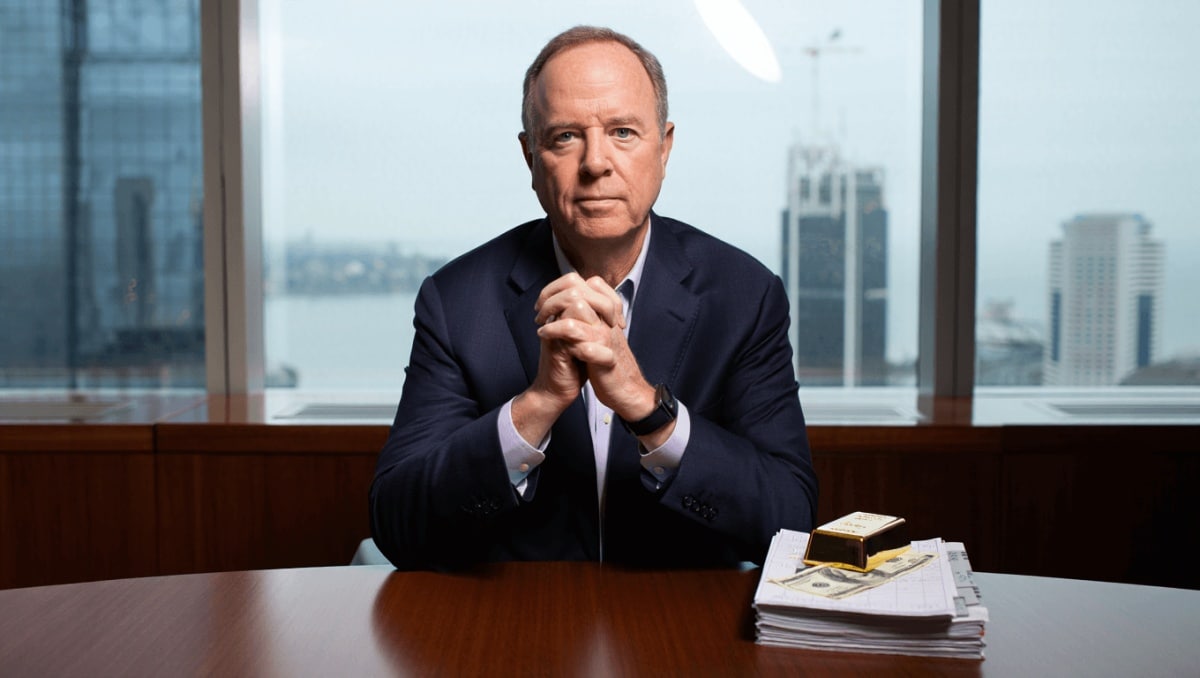
Renowned economist Peter Schiff warns the United States could face an economic breakdown far worse than 2008, driven by shifts in precious metals, changing reserve dynamics and mounting stress on the dollar and sovereign debt. In a recent interview with David Lin, Schiff sketched a scenario where gold and silver rallies mark the start of a wider monetary realignment.
Why Schiff believes gold and silver are early warning signs
Schiff argues the uptick in bullion prices is not a simple commodity move. He sees it as a signal that confidence in the current fiat system is eroding.
Bitcoin crash imminent: U.S. economist warns last chance to sell
Catastrophic liquidation event incoming: senior strategist issues urgent warning
Central banks are changing course
Foreign central banks are reducing dollar exposure and adding gold to their reserves. That trend, Schiff says, points to a gradual shift in global reserve management.
- Lower dollar holdings reduce demand for U.S. debt.
- Rising gold reserves strengthen alternative stores of value.
- These moves can accelerate a revaluation of global monetary roles.
For Schiff, the re-emergence of gold as a reserve asset threatens the dollar’s long-standing dominance.
How a lost reserve role could hit the U.S. economy
Schiff maintains the U.S. has long enjoyed an “exorbitant privilege” as the issuer of the global reserve currency. That status allowed persistent trade deficits and easy financing of large public and private debt.
If that privilege fades, he warns the consequences will be severe and concentrated in the United States.
- Higher borrowing costs as foreign appetite for Treasuries wanes.
- Falling purchasing power as the dollar weakens.
- Pressure on credit-driven consumption and asset prices.
The result, according to Schiff, is a domestic economic collapse that could outstrip the pain of 2008.
Why he expects the fallout to be mainly American
Unlike the global financial contagion of 2008, Schiff predicts the next crisis will be asymmetric. He anticipates the U.S. will bear the brunt.
As Americans lose purchasing power, other regions could keep more of their output at home. That shift could benefit domestic investment and consumption abroad.
Schiff told David Lin the shock would be concentrated in the United States, with Americans losing purchasing power while other countries capture more of their own production.
Potential winners and losers in a rebalanced world
Schiff foresees a redistribution of economic advantages. He believes some countries and sectors may gain as the U.S. adjusts.
- Exporters paid in stronger local currencies may see better domestic returns.
- Countries holding fewer dollar assets could avoid large valuation losses.
- Gold and silver investors may protect wealth from currency erosion.
Schiff frames this as a painful U.S. correction but a potential lift for living standards elsewhere.
Why many investors might be unprepared
Schiff warns that conventional portfolios are exposed. Stocks and bonds, especially U.S.-centric ones, could lose value in real terms if the dollar slides.
Risks for bond and equity holders
Tenor and currency mix matter. Heavy allocations to dollar-denominated debt could amplify losses.
- Bond portfolios may suffer as yields rise to compensate for currency risk.
- Equity valuations tied to cheap financing could reset lower.
- Inflation-adjusted returns could be negative for many investors.
What investors are starting to do
Schiff notes that the shift into precious metals is spreading beyond central banks to private investors. He believes this trend is still in early stages.
- Retail and institutional buyers increasing gold and silver allocations.
- Some reallocating to non-dollar assets and hard commodities.
- Investors considering diversification to hedge currency and debt risk.
He sees a growing chorus of market actors positioning for a monetary reset.
Implications for U.S. policy and markets
If Schiff’s scenario unfolds, policymakers may face hard choices between tightening to defend the currency or expanding to support growth. Both paths carry trade-offs.
- Tightening could deepen recessions and raise unemployment.
- Expansion could stoke inflation and further weaken the dollar.
- Either path may disrupt asset prices and increase volatility.
The debate Schiff raises touches on monetary credibility, fiscal sustainability, and how quickly global reserve preferences can change.










