
Show summary Hide summary
China’s reported stake in U.S. Treasury securities has dropped to levels not seen since the 2008 financial crisis, stirring fresh debate about who holds America’s debt and what it means for global markets.
China’s Treasury holdings slump to crisis-era low
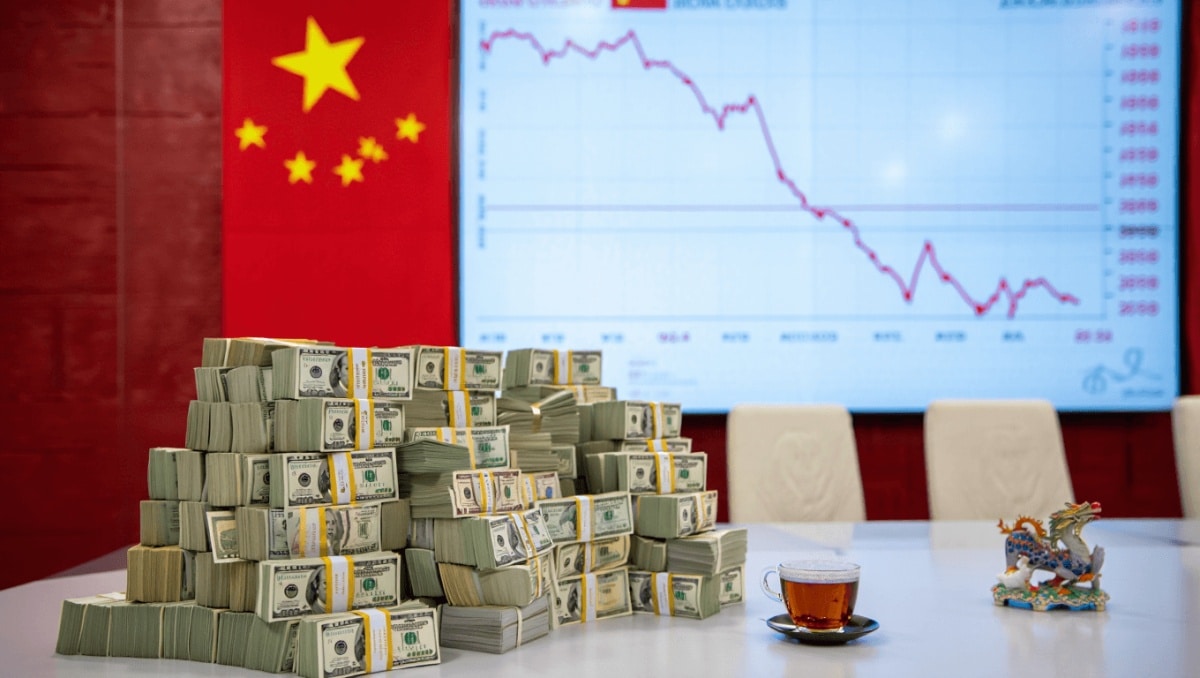
New Treasury Department data show a sharp reduction in Chinese-owned Treasuries. Holdings fell to $682.6 billion, well below a 2013 peak near $1.32 trillion. The decline marks the lowest point since 2008.
Bitcoin crash imminent: U.S. economist warns last chance to sell
Catastrophic liquidation event incoming: senior strategist issues urgent warning
Officials and market watchers point to several drivers:
- Regulatory nudges from Beijing asking domestic institutions to reduce U.S. debt exposure.
- Strategic diversification by sovereign investors seeking other stores of value.
- Periodic portfolio rebalancing amid volatile interest-rate and currency moves.
Belgium shows up as a proxy for hidden Chinese flows
Some of the decline in reported Chinese holdings may be masked by increases in other custodial accounts. Belgium’s reported Treasury ownership has surged.
Belgium’s holdings reached about $481 billion, roughly four times the level seen in 2017. Many analysts view Belgian statistics as a proxy for foreign custodial activity, including assets managed on behalf of Chinese institutions.
How markets reacted: yields, dollar, and spillovers
News of shifting ownership weighed on bond markets. Long-term U.S. yields ticked up while the dollar softened on the headlines.
That reaction came amid other pressures, including a recent politically driven selloff in U.K. government debt. Domestic corporate issuance also added stress when large dollar- and pound-denominated bonds hit the market.
Immediate market effects
- Higher long-dated yields pressured fixed-income prices.
- A weaker dollar reduced demand for U.S. assets in some pockets.
- Cross-border flows into alternatives such as gold gained attention.
Broader geopolitics and investor confidence
Geopolitical disputes have strained confidence in U.S. paper. Recent diplomatic frictions — including high-profile threats over territories like Greenland — have amplified caution.
Countries are responding in different ways. Some are cutting back on U.S. debt. Others are increasing holdings to diversify reserves and stabilize currency exposures.
Which countries are shifting their allocations?
China remains among the largest foreign holders of Treasuries, even after the pullback. It currently ranks behind Japan and the U.K. in total reported holdings.
Meanwhile, several nations lifted their stake last year:
- Canada
- Norway
- Saudi Arabia
Those increases have helped offset some of China’s decline in headline figures.
Performance snapshot: Treasuries vs. peers
Despite headline concerns, U.S. Treasuries have shown resilience. Over the past year they delivered a solid return.
Treasuries returned about 5.3% in the last 12 months, outpaced only by a few markets, including Singapore and Israel.










