
Show summary Hide summary
- What Kiyosaki bought and the $200 per ounce claim
- His rationale: reasons Kiyosaki cites for buying silver
- Signs of dollar stress and policy uncertainty
- Market reaction and public pushback
- Controversies and conflicting posts now in the spotlight
- What investors should watch next
- How this trade fits broader precious-metals narratives
Robert Kiyosaki, author of Rich Dad Poor Dad, announced a fresh bet on silver and a bold price target for 2026. The investor says he just added roughly $50,000 worth of physical silver to his holdings and expects the metal to surge, a claim that has sparked both attention and skepticism across social media and markets.
What Kiyosaki bought and the $200 per ounce claim
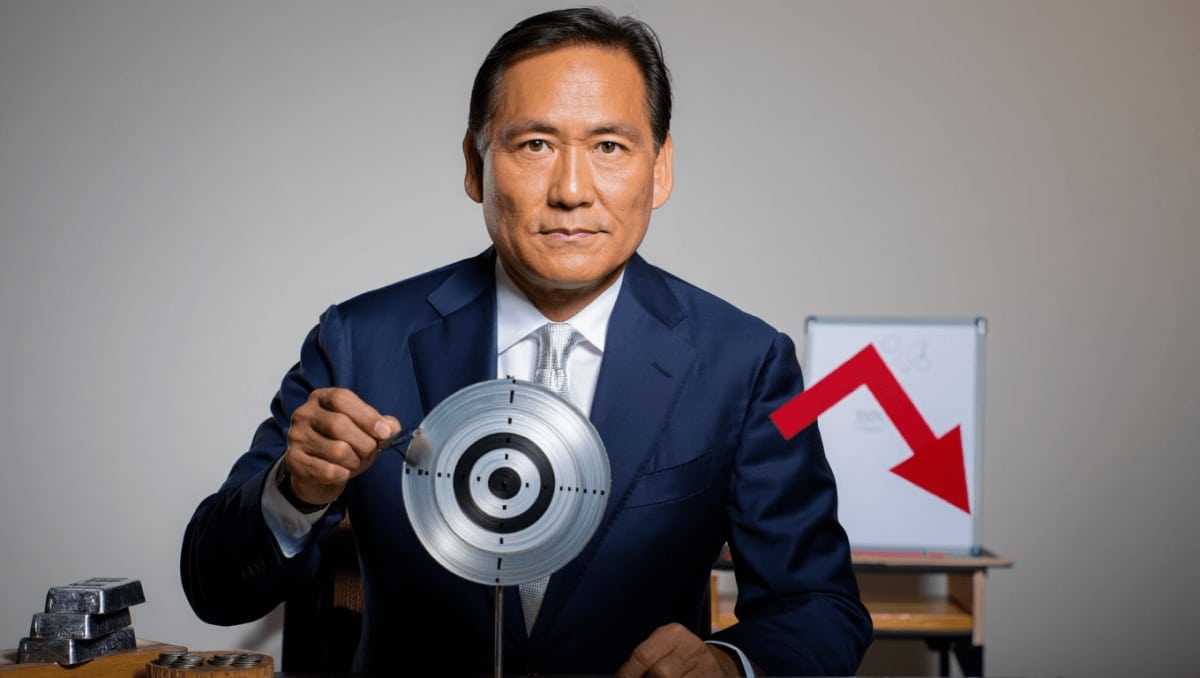
Kiyosaki posted that he purchased 600 U.S. Silver Eagles at about $82 per ounce. That purchase totals close to $50,000 in physical silver. He also reiterated a forecast that silver could reach $200 an ounce sometime in 2026.
Bitcoin crash imminent: U.S. economist warns last chance to sell
Catastrophic liquidation event incoming: senior strategist issues urgent warning
How that math looks
- 600 ounces × $82 ≈ $49,200, rounded to about $50K.
- If silver climbed to $200, the asset would roughly triple from $82.
- That outcome implies a gain near 144% on this purchase within the year, by Kiyosaki’s timeline.
His rationale: reasons Kiyosaki cites for buying silver
Kiyosaki frames the move as protection against currency weakness. He says savers holding dollars are at risk and that the U.S. currency is under pressure. He points to macro forces he believes will lift hard assets higher.
- Perceived U.S. dollar weakness versus major peers.
- Inflation and a preference for tangible assets over fiat.
- Geopolitical shifts and central bank moves that could erode purchasing power.
Signs of dollar stress and policy uncertainty
The U.S. Dollar Index has eased from recent highs in the past year. Kiyosaki highlights that trend when warning followers about fiat holdings.
He also referenced potential policy changes around the Federal Reserve. The nomination of Kevin Warsh for Fed chair has added debate about future monetary approaches.
- Some view Warsh as a hawk unlikely to flood markets with easy money.
- Others expect political pressure to push toward easier policy, which could weaken the dollar.
- Reports that China has told institutions to cut U.S. exposure have also fed concerns.
Market reaction and public pushback
Not everyone accepted the purchase or the forecast at face value. Prominent investors and commentators posted questions and doubts after Kiyosaki’s announcement.
- Some critics teased his signature Rich Dad/Poor Dad persona while questioning motive.
- Others focused on the plausibility of a near-term surge to $200 per ounce.
- Conversations on social platforms ranged from supportive to sarcastic.
Controversies and conflicting posts now in the spotlight
Recent weeks have highlighted inconsistencies in Kiyosaki’s public statements about his asset purchases. He earlier claimed long-term support for Bitcoin, gold, and silver, yet later said he hadn’t bought BTC in years and had not bought gold in decades. He also admitted uncertainty about the timing of past acquisitions.
Those mixed messages prompted critics to question whether his recent buying is fresh or simply a recycled claim. Kiyosaki responded by reaffirming belief in crypto and precious metals while acknowledging confusion over the timing of prior buys.
What investors should watch next
Key indicators to monitor if you follow this story include:
- Silver spot price movements and trading volumes.
- U.S. Dollar Index direction and central bank signals.
- Policy updates from the Fed and comments from political leaders.
- Major holders’ disclosures and China’s reported shifts in exposure.
How this trade fits broader precious-metals narratives
Speculative calls like Kiyosaki’s often stoke debate around safe-haven demand. Precious metals tend to attract attention when faith in fiat currency weakens.
Physical coin purchases, like U.S. Silver Eagles, remain a common way individuals express that preference. Dealers, premiums, and availability can affect execution and returns.










