
Show summary Hide summary
- Funding, investors and the startup’s brief
- How the palm-scan identification works on phones
- Why companies are looking beyond face recognition
- Security, privacy and blockchain architecture
- Business model and integration targets
- Leadership, advisors and academic partnerships
- Roadmap and product focus after the seed round
VeryAI announced a $10 million seed round as it launches a palm-scan identity tool aimed at stopping AI-driven fraud. The round was led by Polychain Capital and included backers such as Berggruen Institute and Anagram. The launch introduces a hardware-free biometric that works on ordinary smartphones and targets deepfakes and synthetic identity threats.
Funding, investors and the startup’s brief
The $10 million infusion marks VeryAI’s first institutional raise. Polychain led the deal. Angel and institutional participants joined to support the debut product and platform development.
Bitcoin crash imminent: U.S. economist warns last chance to sell
Catastrophic liquidation event incoming: senior strategist issues urgent warning
- Lead investor: Polychain Capital
- Other participants: Berggruen Institute, Anagram
- Use of proceeds: expand Proof of Reality platform and build tools to separate human users from AI-generated identities
How the palm-scan identification works on phones
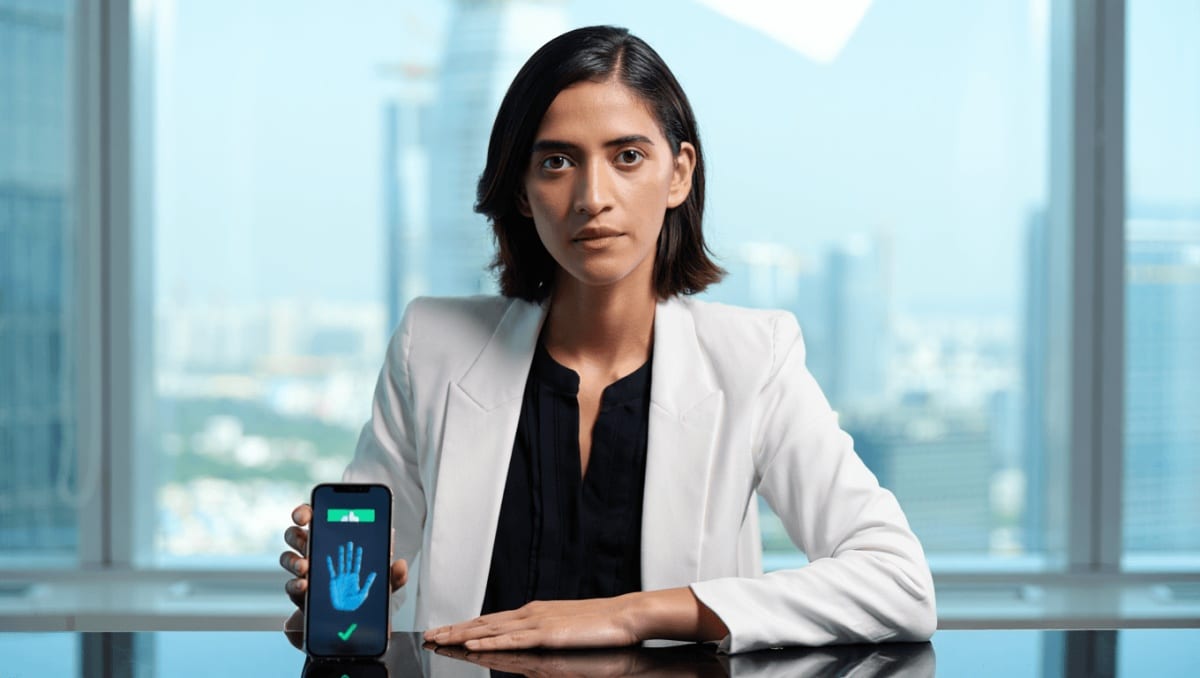
VeryAI captures palm features using a phone camera. No special hardware is required. The system turns captured images into irreversible feature templates. The company says it never stores raw palm images.
The biometric model reports very low false acceptance rates. For one hand the company cites a rate near 1 in 10 million. When both palms are used, that error rate drops dramatically — to a figure the company describes as on the order of 1 in 100 trillion.
- Device: standard smartphone camera
- Data storage: irreversible feature representations, not images
- Outcome: non-traceable identifiers confirm an action without linking to identities
Why companies are looking beyond face recognition
Synthetic media and deepfakes are prompting firms to rethink authentication. Traditional mechanisms such as facial recognition, CAPTCHA, and many two-factor flows show growing gaps.
Industry metrics referenced by the company indicate attackers can breach systems in under an hour on average. VeryAI positions palm biometrics as a countermeasure to those AI-driven weaknesses.
Security, privacy and blockchain architecture
The platform records enrollment events on Solana to leverage fast finality and low fees. VeryAI integrates cryptographic tools to protect user privacy and preserve interoperability across apps.
- Blockchain: Solana for on-chain registrations
- Privacy tech: Zero Knowledge Proofs (ZKP) and Solana Attestation Service (SAS)
- Storage optimization: ZK compression from Light Protocol to keep on-chain data minimal
- Privacy guarantee: system produces attestations that don’t reveal personal data
VeryAI states it emits an attestation that proves an event occurred but does not create a traceable link to an individual. This design aims to let users authenticate across decentralized apps without exposing biometric data.
Business model and integration targets
The company sells its solution on a B2B basis. Typical customers include crypto exchanges, fintech platforms and other online services needing robust identity verification.
Pricing is structured around monthly verification volumes. Integration uses standard phone cameras and APIs to plug into existing onboarding and login systems.
Leadership, advisors and academic partnerships
VeryAI’s CEO has prior experience building identity and credential systems for large crypto and web3 projects. The chief science officer is a published researcher with patents in palm biometrics.
- CEO: built identity tooling and credential networks for millions of users
- Chief Science Officer: academic record and patents in palm biometrics
- Advisor: Matthew Groh from Northwestern’s Kellogg School joins to guide research
The startup has begun a research collaboration with Northwestern University to enhance defenses against deepfakes and to improve synthetic media detection.
Roadmap and product focus after the seed round
Proceeds will accelerate the Proof of Reality platform and fund additional features to distinguish human users from AI-generated profiles. The company plans to expand integrations and refine detection models that resist evolving synthetic threats.
Featured image via Shutterstock.










