
Show summary Hide summary
- What the Death Cross in financials actually signals
- Recent history: parallels with earlier breakdowns
- Why financial stocks are lagging the broader market
- Macro risks adding pressure: private credit and oil
- What hedge fund activity reveals about sentiment
- Signals traders and investors should track next
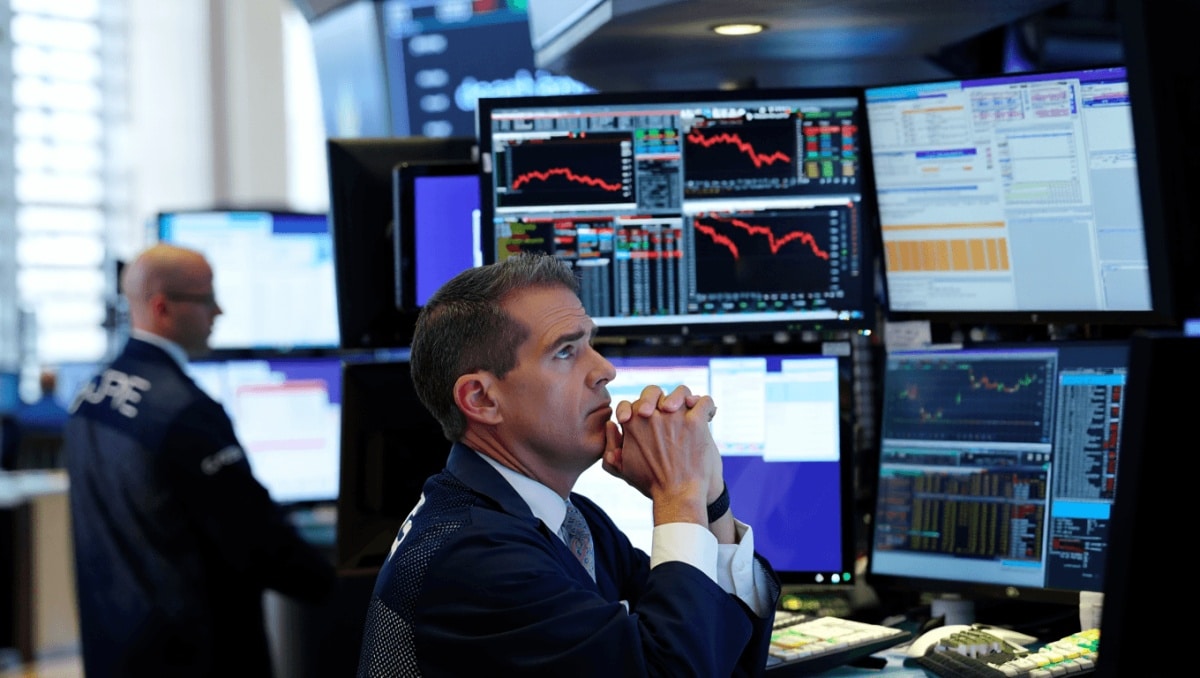
Financial names in the S&P 500 opened Tuesday on the defensive as a key technical signal flashed: the sector’s short-term trend slid beneath its longer-term average. Traders and portfolio managers took notice, since that crossover often signals fading momentum and raises the odds of further downside.
What the Death Cross in financials actually signals
The term refers to a short-term moving average crossing under a long-term one. In most market coverage, that means the 50-day moving average falling below the 200-day. The pattern does not predict an exact timeline. Instead, it flags a change in trend and a higher probability of continued weakness. It’s a confirmation tool, not a trade trigger.
Bitcoin crash imminent: U.S. economist warns last chance to sell
Catastrophic liquidation event incoming: senior strategist issues urgent warning
Historically, such crosses have coincided with tougher stretches for the sector. They tend to appear after a period of selling pressure and can precede further declines if economic or sector-specific headwinds persist.
Recent history: parallels with earlier breakdowns
Two prior episodes are instructive. Late last year, the same technical setup showed up as financial shares were already under pressure from rate-driven stresses and bank-specific shocks. Earlier, in spring 2022, the 50-day stayed above the 200-day for a long spell before reversing. That episode preceded an extended sell-off of roughly double digits over several months.
- November 2023: a crossover amid lingering post-rate-hike weakness.
- April 2022: eventual ~18% slump over the following months.
Why financial stocks are lagging the broader market
On a relative basis, financials have fallen behind the S&P 500. Relative strength metrics have slipped to readings not seen since the late-2020 rebound from the pandemic trough. That suggests the sector’s problems go beyond short-term volatility.
Several structural and cyclical factors help explain the underperformance:
- Interest-rate volatility that compresses lending margins.
- Concerns about exposure to private credit and less liquid assets.
- Market uncertainty around bank capital, loan losses, and regional bank stress.
Macro risks adding pressure: private credit and oil
Investors are watching two macro angles closely. First, banks’ links to private credit markets raise questions about valuation and liquidity if conditions deteriorate. Second, a renewed rise in oil prices could feed inflation and weigh on economic growth.
Both channels can hurt financial-sector earnings and tighten lending standards. Higher input costs or a slowdown in growth would likely amplify sector weakness.
What hedge fund activity reveals about sentiment
Recent research from a major bank indicates hedge funds increased selling in financial names across regions during the week through March 13. Reports show funds were adding shorts and trimming positions in banks, insurers, fintechs, and trading firms.
That behavior can mean different things:
- Pure bearish bets on the sector’s outlook.
- Portfolio hedging against broader market risk.
- Tactical positioning around specific names under stress.
Rising short interest often amplifies moves, especially in thinly traded stocks. Yet analysts caution that elevated shorts do not always equal long-term negative conviction in a company’s fundamentals.
Signals traders and investors should track next
Technical indicators
- 50-day vs. 200-day moving averages across major bank ETFs.
- Relative strength index and sector breadth readings.
- Short interest trends and changes in open interest on options.
Fundamental and macro cues
- Quarterly bank earnings and guidance on loan-loss provisions.
- Trends in private credit spreads and delinquencies.
- Oil prices, inflation data, and central-bank commentary.
- Flows data showing whether institutional investors are adding or trimming financial exposure.
Watching these indicators together will help separate temporary volatility from a deeper rotation away from financials. Mixing technicals with credit and macro reads gives a fuller picture of near-term risk.










