
Show summary Hide summary
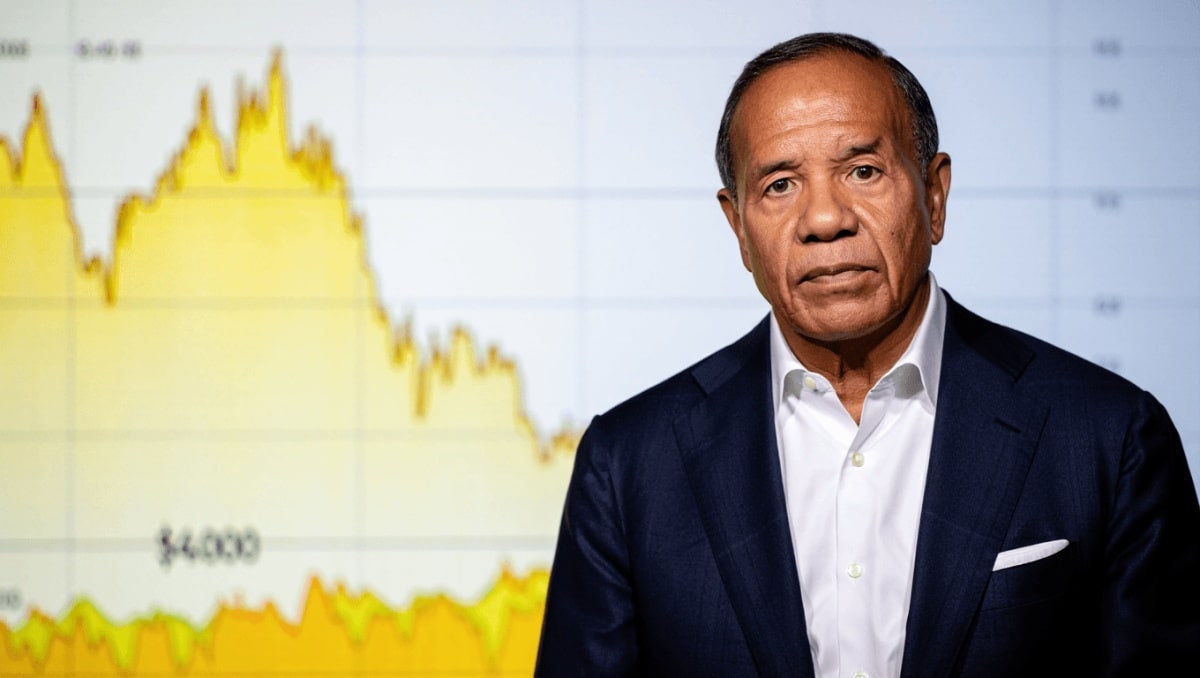
Late on June 24, bestselling author and investor Robert Kiyosaki posted on X about gold dipping under $4,000 and hinted he was watching charts for a buying signal. His brief messages mixed market timing with a familiar real estate analogy, drawing quick attention from followers who track his takes on cash, precious metals, and crypto.
Why Kiyosaki flagged the gold drop
Kiyosaki framed the slide in the gold price as an opportunity rather than panic. He said he was observing technical indicators to decide when to increase his allocation. This reaction follows a pattern: when assets trade lower, he often checks charts for a clear entry.
Bitcoin crash imminent: U.S. economist warns last chance to sell
Catastrophic liquidation event incoming: senior strategist issues urgent warning
The key point: he views price weakness as a potential buying window, but only if charts support the move.
He prefers charts over bold claims — but gave little detail
Despite the emphasis on technicals, Kiyosaki did not share which indicators he uses. He avoided naming moving averages, RSI levels, or support zones. Instead, his commentary stayed high level, focusing on trend direction and timing.
What he did say relates to three ideas
- Monitor trend direction.
- Avoid action until chart confirmation.
- Compare price movement to other markets for context.
Without specific thresholds, followers must infer his rules. That keeps his guidance flexible but vague for investors seeking concrete triggers.
Translating his real estate playbook to bullion
Kiyosaki often explains investments through property metaphors. In his view, markets behave like neighborhoods. If a neighborhood looks like it’s improving, you buy a bargain house. If it’s deteriorating, you pass.
Applied to gold, that logic means he’s not buying solely because the price fell. He wants to know whether the broader economic “neighborhood” supports a safe purchase. That assessment can include macro data, geopolitical risk, and market sentiment.
When he might actually buy more gold
From his messages, three conditions seem central to his decision:
- Technical charts point to a reversal or clear support.
- Macro indicators either show stability or a scenario where gold acts as a hedge.
- Price reaches levels he considers attractive compared with his cost basis.
Notably, he also suggested there are times when a weakening economy could make him hesitate to add more gold. That stance departs from the common narrative of gold as an automatic safe haven.
How gold fits into his broader asset mix
Kiyosaki has repeatedly positioned precious metals alongside cryptocurrencies and real assets as protection against inflation and monetary debasement. He tends to place assets into categories that reflect their role in a crisis.
- “People’s money”: selected cryptocurrencies.
- “God’s money”: gold and silver.
- Currencies he distrusts: fiat such as the US dollar.
He has promoted Bitcoin and Ethereum as alternatives to what he calls “fake money,” while calling gold and silver enduring stores of value.
Past purchases and a notable price reference
Kiyosaki shared that most of his existing gold positions date back to the early 2000s, when he bought at much lower prices. He referenced paying roughly $300 per ounce for much of his stockpile. A typographical slip in one post created confusion over the exact year, but the meaning was clear: his cost basis is far below current levels.
Implication: with a low average purchase price, he has room to trim or add depending on charts and macro signals.
What followers should watch next
- Any follow-up posts from Kiyosaki that specify chart levels or triggers.
- Macro releases that affect inflation expectations and real yields.
- Price action around key support zones near recent lows.
Investors tracking his commentary will likely wait for clearer technical confirmation before copying any trade idea.










